

|
|
|
|

SADHANA
Sadhana means spiritual path, that is the whole all the practices, the rituals and the austerities that are performed with regularity and concentration, with the purpose to get Moksha (liberation). It is an act of purification and amplification of the mind, which leads to self-realization.
In the tantras is affirmed that Shiva, in his endless grace, full of compassion for the suffering beings in this dark age, proclaimed through the tantric sadhana the spiritual emancipation. Tantrism is not a simple theory or philosophy, but it prescribes above all a systematic sadhana, a regular discipline, according to the temperament, ability and evolutionary degree of the apprentice. A formidable opportunity to experiment extraordinary techniques for the spiritual evolution, introducing in the world of the yantras, mantra and tantra.
Yantra, mantra and tantra symbolically represent the three paths of the Hinduism.
Yantra represents the path of the knowledge (Jnanamarg),
Mantra represents the path of the devotion (Bhaktimarg), Tantra represents the path of the action (Karmasanyasmarg).
Principal types of Sadhana
Some aghori sadhanas are:
Pātra Sadhana (ritual offerings). There are 324 different kinds of Pātra Sadhana
Śava Sadhana (done sitting on a corpse)
Smashan Sadhana (done in the cremation ground)
Pancha Munda Sadhana. (done sitting on a seat of five skulls)
N.B. The procedures of these Sadhanas are secret (Gupta), passed only from Guru to disciple.
Panchamakara: Madya (wine) - Māṃsa (meat) - Matsya (fish) - Mudrā (parched grain) - Maithuna (Union)
Pancha Makara is also known as the Five Ms. In this Sadhana the five elements are purified and energized by the mantra, through them and along with the identification with his own divinity the Aghori can develop the divine connection to the cosmic Shakti.
They are the following:
Madya: wine. It represents also the divine nectar called Amrita. Transforms the Tattva of Fire.
Māṃsa: meat. It represents for the control of speech. Silence. Transforms the Tattva of Air.
Matsya: fish. It represents the Ida and Pingala Nadis that are controlled by the sadhak through the practice of Pranayama. Transforms the Tattva of Water.
Mudrā: grains. It represents the spiritual company but also the upright posture. Transforms the Tattva of Earth.
Maithuna: This is the most misunderstood concept of Pancha Makara. Maithuna literally means union, is the union of the goddess Kundalini with Shiva. Transforms the Tattva of Ether.
In Panchamakara Sadhana the subtle properties of each element are known and followed up with the awakening of the Kundalini and its consequent rise. Here the Aghori will experience the perfect knowledge of the microcosmic world and will internally use the properties of each element. When the Kundalini reaches Visarga Bindu, the divine nectar is blessed.
While the macroscopic world is only a limited reality, depending on which level exists the self, the complete understanding of the microcosmic levels will give an understanding of all the worlds that exist in the subtle levels, levels that have equal representation in the macrocosmic space. After the climb up to Visarga Bindu, the Kundalini starts its way down, once again visiting all the subtle worlds.
On achievement of the original residence of Kundalini in Muladhara Chakra, the Aghori can now understand the world with a new awareness, and the identification with the deity gets closer and closer to perfection.
Shava Sadhana
Shava Sadhana (शाव साधना) is a spiritual practice of the Vamachara Tantra in which the Sadhaka sits in meditation on a corpse. Shava Sadhana is considered the culmination of Tantric philosophy, it is one of the most important, difficult and most secret rituals of tantra. There are strict rules that must be followed in the ritual and choice of the appropriate corpse and specific secrets mantras are used. If the ritual is not performed correctly it can lead to disastrous consequences. Even a small mistake in the ritual can lead to the practitioner's death or madness. Very few, including the aghori, know the correct procedures which are handed down only from guru to disciple. This of course gives rise to many conjectures and misunderstandings that result in false and incorrect procedures or even in videos totally distant from the original ritual that remains secret and should not be filmed.
Through the Shava Sadhana you explore that thing that everyone is so scared, death. The ritual is done using a corpse, considered by Hindus to be a highly impure symbol and a taboo. The close encounter and the union with death overcomes this fear and leads to liberation. The aim is to join the Kundalini with Param-Shiva. It is an alchemical process that transforms gross energies into subtle energies. From the yogic or tantric point of view, it means detachment from the physical world and union with the Absolute. Detachment leads to liberation from Samsara (the cycle of birth, death and reincarnation) and one stands beyond all duality in a cosmic union.
Shava Sadhana is performed at night during Amavasya (new moon) in a crematorium, in a sacred place or in any solitary place. In various tantric texts (such as Tantrasara, Nilatantra, Kaulavali-nirnaya, Kulachudamani and others) are described the rules and procedures to accomplish it but the mantras and many procedures remain gupta (secrets) and only the guru can impart them to the disciple.

10 places to do Sadhana:
Grihishana: North (Dikshabisheka).
Grihnadya: Center of the room or house (Shaktabisheka - Shaivabisheka).
Grihtorana: On the lower part of the main gate (Purnabisheka).
Grihvakili: In front of the door or on the veranda.
Ekonardha Janapat: Near the house, where there is a T-road, exactly at the intersection.
Churaham: At the first intersection (X) of two roads near the house.
Pipalvriksha Mulam: On the roots of a Pipal tree.
Smashana: Cremation field.
Shitila Shivalayam: In cemeteries or abandoned places. All forces and spirits gather here: Preta, Pishacha, etc.
Gurugriham: At the feet of the Guru or his image or his Samadhi.
Very auspicious Sadhana Thitis, especially to start Sadhana:
Adivaram (Sunday): in Hasta Nakshatra for Surya; but not on Hash-Dwadsashi.
Somavaram (Monday): in Mrigashira - 3 for shiva, Rudra, Pashupatha, Nilakanthaastra, Agnirudra; but not on Mrigashira-Ekadashi.
Mangalavaram (Tuesday): in Ashwini: for all devis, esp. Shakta-Vidyas, but not
Panchami.
Buddhavaram (Wednesday): in Anuradha: for all Vaishnava-Vidyas, except Tadiya.
Guruvaram (Thursday): in Pushaymi, for Alchemy, Oshadies, Guruvidya; but not on
Shashti.
Shukravaram (Friday): in Revati; for Pushti karma, business, Kama-Vidya, not on
Ashtami.
Shanivaram (Saturday): in Rohini; for Hanuman, Bhairava-Vidya, especially Krishna-Paksha
Trayodashi: Shani Puja, but not on Navami.
- Any months if Amavasya falls on Mangalavaram: one can draw Kalis Attention.
- If Surya-grahana (Solar eclipse) happens on Amavasya, or Shuklavaram: Moksha, Immortality for Aghories.
Sadhana Tithis Panchanga
Breath
216110 = number of breaths day and night (for 24 h).
10800 = solar breath for 4 seconds
10800 = lunar breath for 4 seconds
Time
24 hours - 60 minutes – 1.440 minutes
1440 minutes x 60 seconds = 86.400 seconds 86400/21600 — 4 seconds = I breath
1 Nadika of 2-4 minutes = 1.440 seconds (=360 breaths)
1 solar year = 360 days = 8.640 hours
1 solar month = 30 days = 720 hours
1 season = 60 days = 1.440 hours
1 half-month — 15 days — 360 hours
Indian Measures
it is one of the conditions of a Kalpa (aeon) that in it the planets with their apsides and nodes must unite in.
0 degrees of Aries - therefore within each Kalpa a planet must make a certain number of revolutions.
1 Chaturyuga (4 Yugas) = 1 Kalpa
10 long syllables = 1 Prana (breath 4 seconds)
360 Pranas = 1 Nadika (24 minutes)
60 Nadikas = 1 day
1 Chaturyuga = 4.320.000 solar years
A Yuga is divided into 4 parts:
Krita Yuga (or Satya Yuga) = 1.728.000 solar years
Treta Yuga = 1.296.000 solar years
Dvapara Yuga = 864.000 solar years
Kali Yuga = 432.000 solar years
Each age has two twilights:
Krita Yuga
Dawn 144.000
Day 1.440.000
Dusk 144.000
Treta Yuga
Dawn 108.000
Day 1.080.000
Dusk 108.000
Dvapara Yuga
Dawn 72.000
Day 720.000
Dusk 72.000
Kali Yuga
Dawn 36.000
Day 360.000
Dusk 36.000
This means that one solar year = 1 day of the Gods
One Kalpa (Aeon) = 1 day of Brahma
One Kalpa = I night of Brahma
Brahma's life = 100 years of these days — 864.000.000.000 divine years.
Note that the Kali Yuga, although taken to have an aeonic impact upon people's way of life, is nevertheless a fiction used for astrological computation. At the beginning of the Kali epoch (17th Feb 3102 BC) the mean.
Nyasa is a Sanskrit word which means "to position", "to apply".
Nyasa rituals are included in many tantric rituals and pujas which involve a series of touches at specific points on the body, in special sequences and using mudras. Nyasa is a consecration, a divinization of the body of the worshiper, bringing the presence of a divinity in the body, it is the macrocosm that is reflected in the microcosm.
There are different types of Nyasa practice, some very complex and elaborate, the most important of which are Kara Nyasa and Anga Nyasa.
Some of the most common are:
Rishi Nyasa in which the basic characteristics of the mantra are placed on the body.
Kara Nyasa in which the five elements are placed on the hands.
Anga Nyasa in which the deities are placed on the body.
Matrika Nyasa in which the 50 letters of the Sanskrit alphabet are placed on the body.
Rishi Nyāsaṃ
One of the main Nyasa in Tantric practice, associated with Viniyoga. It is a statement of which mantra will be chanted and is usually performed as the first Nyasa.
Rishi (the sage who first uttered the mantra) - touch the head
Chandas (metric) - touching the nose while covering the mouth.
Devata (divinity) - touching the heart.
Bija (root - seed) - touching the right shoulder.
Shakti (power - energy) - touching the left shoulder.
Kilaka (key to unlock the mantra) - touching the navel.
Viniyoga (application - use) join the palms (Namaskar Mudra), open them and then turn on the back of the hand and exit opening the palms.
Kara Nyāsaṃ
मन्त्र + अङ्गुष्ठभ्यम् नमः
मन्त्र + थर्जनीभ्यम् स्वाहा
मन्त्र + मध्यमभ्यम् वषट्
मन्त्र + अनामिकाभ्यम् हुं
मन्त्र + कनिष्ठाकभ्यम् वौषट्
मन्त्र + कर थल कर पृष्ठभ्यम् फट्
Mantra + Aṅguṣṭhabhyam Namaḥ - index finger on the thumb.
Mantra + Tharjanībhyam Svāhā - thumb on the index finger.
Mantra + Madhyamabhyam Vaṣaṭ - thumb on middle finger.
Mantra + Anāmikābhyam Huṃ - thumb on the ring finger.
Mantra + Kaniṣṭhākabhyam Vauṣaṭ - thumb on the little finger.
Mantra + Kara Thala Kara Pṛṣṭhabhyam Phaṭ
KARA - rub the right palm on the left below.
THALA - rub the right palm on the left above.
KARA - rub the right palm on the left below.
PṚUṢṬHABHYAM - rub the right palm on the left above as you exit.
PHAṬ (or NAMAḤ) - with two fingers tap on the palm of the hand.
Hand ritual
Mantra + salutations by the thumb
Mantra + salutations by the second finger
Mantra + salutations by middle finger
Mantra + salutations by the fourth finger
Mantra + salutations by little finger
Mantra + salutations by the palm and back of the palm
Aṅga Nyāsaṃ
मन्त्र + हृदयाय नमः
मन्त्र + शिरसे स्वाहा
मन्त्र + शिखायै वषट्
मन्त्र + कवचाय हुं
मन्त्र + नेत्रत्राय वौषट्
मन्त्र + अस्त्राय फट्
भूर् भुव सुवर्-ॐ-इति-दिग्-बन्धः
Mantra + Hṛdayāya Namaḥ - ring finger, middle finger and thumb on the heart.
Mantra + Śirase Svāhā - ring finger, middle finger and thumb on Sahasrara.
Mantra + Śikhāyai Vaṣaṭ - thumb under, little finger up on Shika.
Mantra + Kavacāya Huṃ - arms crossed on the shoulders.
Mantra + Netratrāya Vauṣaṭ - thumb, ring and middle finger on eyes.
Mantra + Astrāya Phaṭ - snapping fingers.
Bhūr Bhuva Suvar-Om-Iti-Dig-Bandhaḥ - turn the index finger on the head - with two fingers tap on the palm of the hand - cross the index fingers and forearms.
Body parts ritual
Mantra + salutations from the heart
Mantra + salutations from the head
Mantra + salutations from the hair
Mantra + salutations to the armor
Mantra + salutations to the three eyes
Mantra + salutations to the weapon
Salutations to all directions
Ācamana
(Ritual sipping of water)
Ācamana, Acamanīya or Achamya is a preliminary ritual of purification always present in the Tantric and Vedic rituals or in the Pūjā, the ritual of worship. Represents one of the sixteen Upacāra, or “sixteen types of homage and services”, as described while explaining the mode of worshipping the phallic form of Śiva (Liṅga) in the Śivapurāṇa 1.11.
Ācamana:
With the ring finger take a drop of water and put it in the palm of your
hand, then put in the mouth by placing the heel of the palm on the lower
lip.
1st drop - Your MANTRA + ATMA TATVAM SHODAYAMI SVĀHĀ
2nd drop - Your MANTRA + VIDYA TATVAM SHODAYAMI SVĀHĀ
3rd drop - Your MANTRA + SHIVA TATVAM SHODAYAMI SVĀHĀ
4th drop - OM HRIM GURU HRIM OM SARVA TATVAM SHODAYAMI
SVĀHĀ
Panchakshari Mantra and Sadhana
Stages of Aghora (Vāmācāra वामाचार "Left-Hand Path")
Pashu (Animal)
Vīra (Hero)
Suvīra
Ativīra
Mahavīra
Paramavīra
Dīvya (Divine)
Bāla (Child)
Jaya Bāla
Ajita Bāla
Aparajita Bāla
Patta Bāla (Crowned Bāla)
Unmatta (Mad)
Pīshacha
Avadhut
Hamsa
Rājahamsa or Rāja Avadhut
Brahmahamsa or Brahma Avadhut
Paramhamsa or Param Avadhut
Īshvāra (Aghoreshwar, Kauleshvar etc.)
Clans
|
KALI KULAM
|
TARA KULAM
|
SHRI KULAM
|
TRIPURA KULAM
|
||||||
|
KALI
|
DHUMAVATI
|
TARA
|
CHINNAMASTA
|
BAGALA MUKHI
|
MATANGI
|
KAMALA
|
TRIPURA SUNDARI
|
TRI BHUVANESVARI
|
TRIPURA BHAIRAVI
|
|
AGHORA PANT
|
VAMA PANT
|
SHRI PANT (ANANDA NATH)
|
TRIPURA PANT
|
||||||
| ANANDA BHAIRAVA NATH
|
|||||||||
The 18 aspects of the Mother
|
|
Vidya |
Consort |
Pītham |
|
|
|
|
|
|
1 |
Bhairavi |
Dakshinamurti |
Nepal |
|
2 |
Bhagalamukhi |
Maharudra |
Dwarka |
|
3 |
Tripurasundari |
Mahakamesvara |
Prayag |
|
4 |
Tara |
Akshobya |
Vashistha Ashram (Assam) |
|
5 |
Cinnamasta |
Kadambha |
Tibet |
|
6 |
Matangi |
Mattamatanga |
Madhurai (Minakshi Mandir) |
|
7 |
Dumavati |
Non ha consorte Shava |
Pakistan |
|
8 |
Triputa |
Mahadeva |
Kurukshetra |
|
9 |
Sopnavati |
Dandanayaka |
Amarkantak |
|
10 |
Durga |
Sadhananda |
Mysore |
|
11 |
Tribuvanesvari |
Tribuvanesvara |
Nasik |
|
12 |
Kali |
Mahakala |
Ujjain |
|
13 |
Kamala |
Mahavishnu |
Bharuch |
|
14 |
Annapurna |
Vishvanath |
Kashi |
|
15 |
Gayatri |
Savitru |
Puskar |
|
16 |
Sarasvati |
Paramesthi |
Kashmir
(but
there is no
temple) |
|
17 |
Padmavati |
Vrishabha |
Tirupati |
|
18 |
Kamakya |
Umananda |
Govati (Assam) |
8 obstacles in the spiritual path
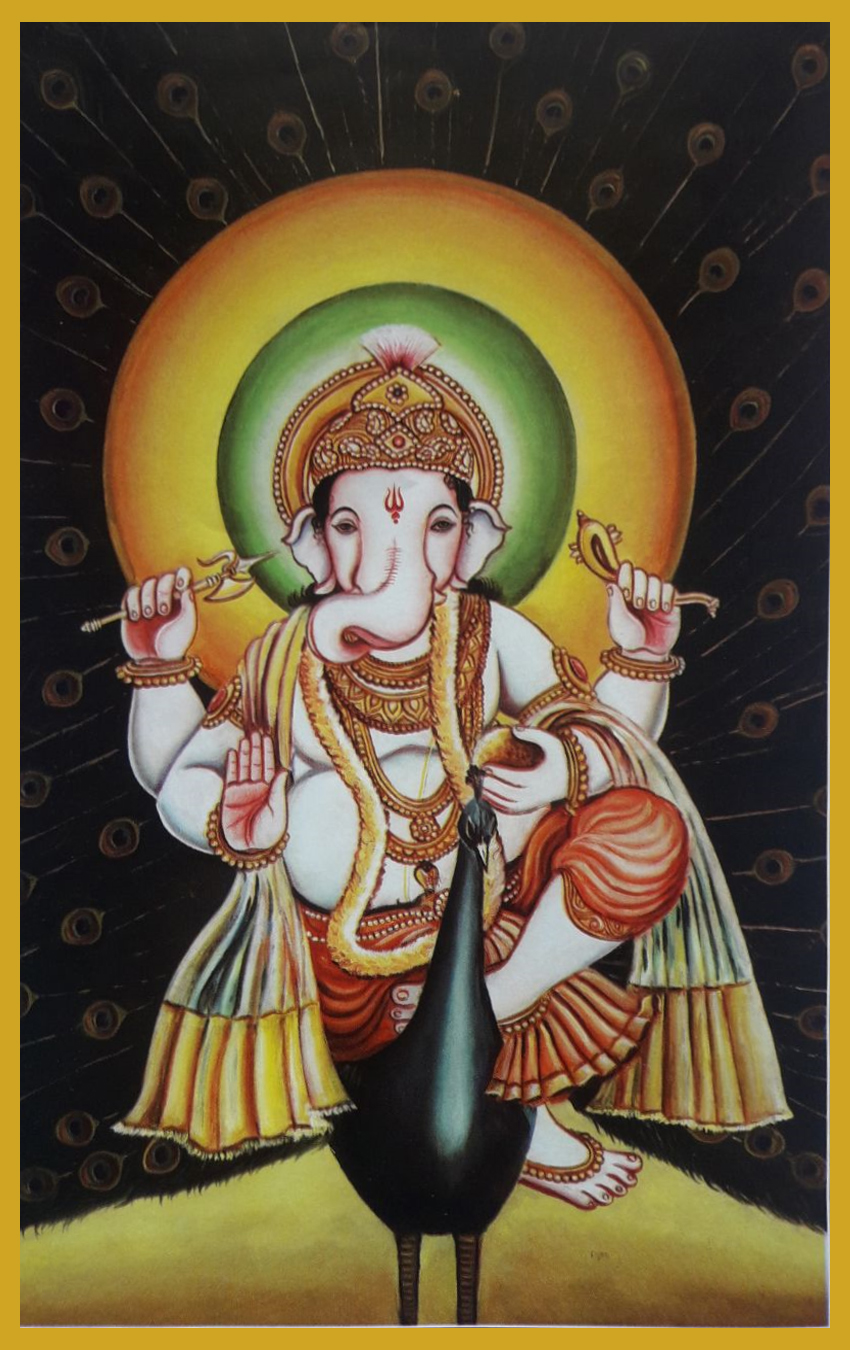
The eight avatars of Ganesha according to Mudgala Purana, the demons destroyed also represent the eight obstacles in the spiritual life:
1. Vakratuṇḍa "curved trunk", his mount is a lion. He destroyed Matsara, the demon of jealousy.
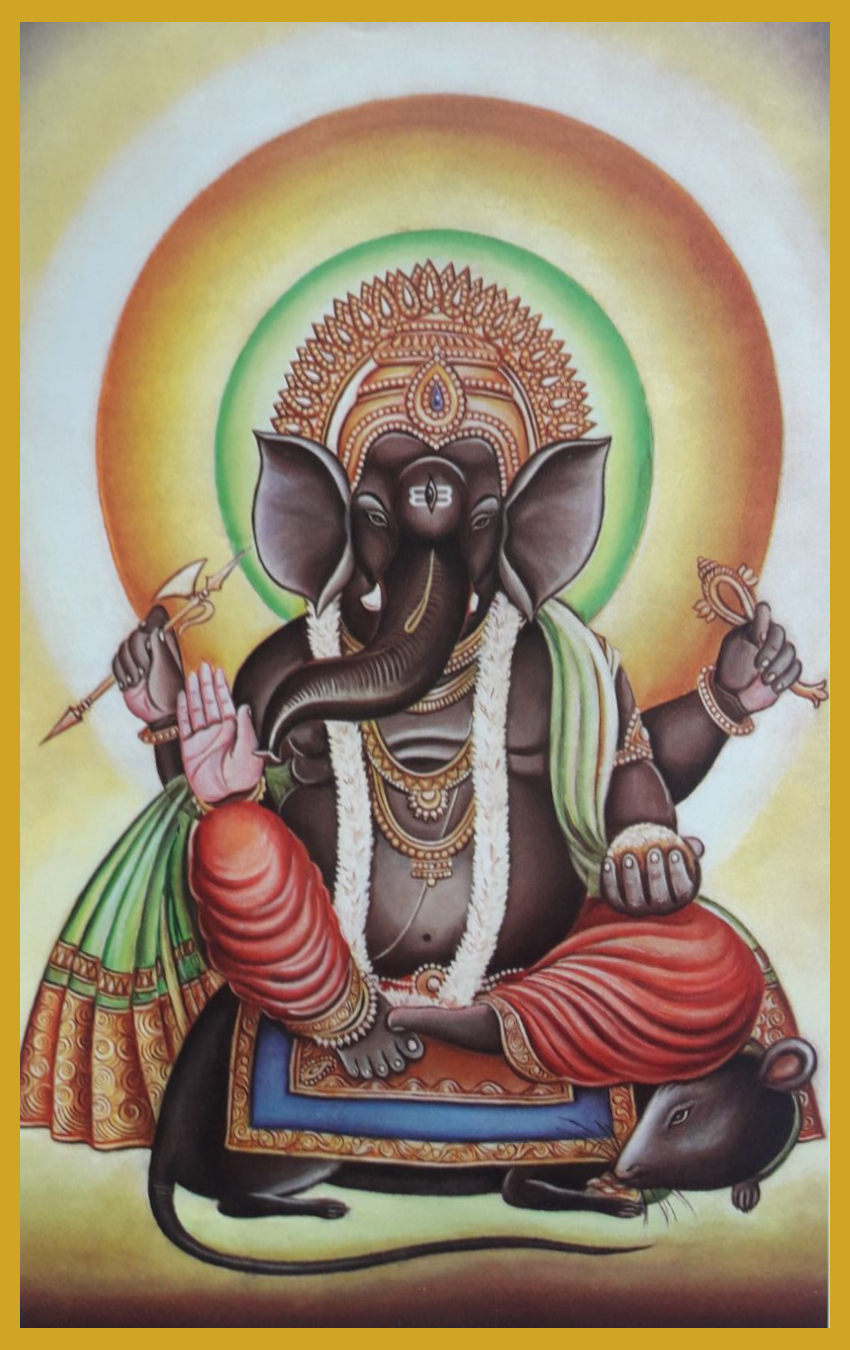
2. Ekadanta "single tusk", his mount is a mouse. He destroyed Mada, the demon of drunkeness.
3. Mahodara "big belly", his mount is a mouse. He destroyed Moha, the demon of illusion.
4. Gajānana "elephant face", his mount is a mouse. He destroyed Lobha, the demon of greed.
5. Lambodara "pendulous belly", his mount is a mouse. He destroyed Krodha, the demon of anger.
6. Vikaṭa "unusual form", "misshapen", his mount is a peacock. He destroyed Kāma, the demon of desire.
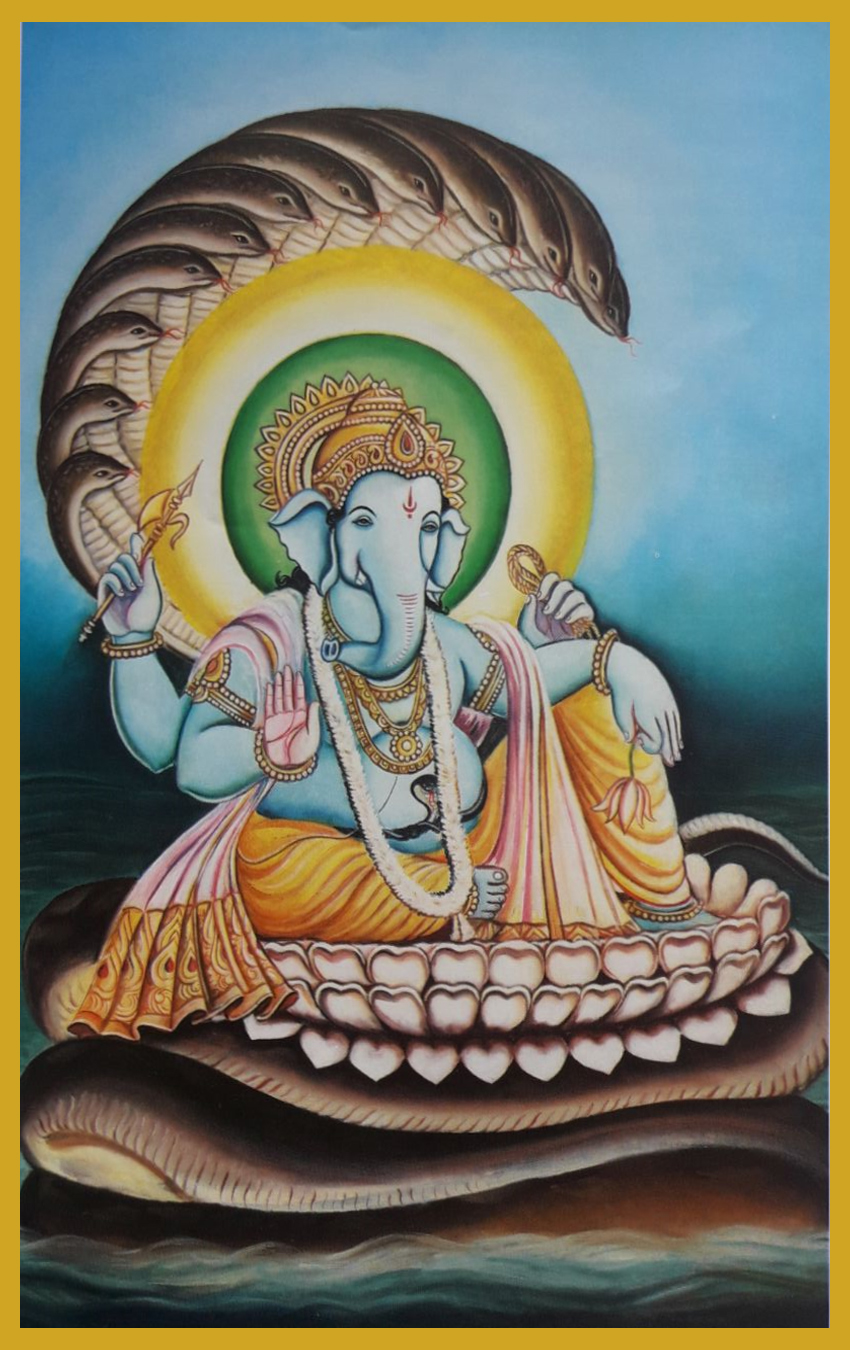
7. Vighnarāja "king of obstacles", his mount is the celestial serpent Śeṣa. He destroyed Mama, the demon of ego.
8. Dhūmravarṇa "grey color", his mount is a mouse. He destroyed Ahamkāra, the demon of self-infatuation.
|
|
|
|
|
|
|
|
|
Ucchishta Ganapati - The Tantric Ganesh
All Yantras published on this site in one single book in pdf

Lord Shiva 108 Names Meaning
|
1 Aashutosh - One who
fulfills wishes instantly
|
10 Bholenath - Kind
hearted Lord
|
|
19 Dhyanadeep - Icon of
meditation and concentration
|
28 Hara - Remover of
Sins
|
|
37 Kapalin - One who
wears a necklace of skulls
|
46 Mahadeva - Greatest
God
|
|
55 Nagabhushana - One
who has serpents as ornaments
|
64 Pashupati - Lord of
all living beings
|
|
73 Rudraksha - One who
has eyes like Rudra
|
82 Shankara - Giver of
Joy
|
|
91 Suprita - Well
pleased
|
100 Umapati - Consort of
Uma
|
Shiva Ashtottara Shata Namavali